

The stickiness, or tackiness, of clear PVC film refers to the tendency of the film surfaces to adhere to each other when two layers come into contact. This is a common characteristic of flexible PVC film, especially when the film is soft and tightly wound into rolls.
The level of stickiness can vary depending on the PVC formulation, softness, production process, temperature, storage conditions, and surface treatment. If the film is too sticky, the layers may be difficult to separate during unwinding, cutting, printing, or other downstream processing.
Super clear PVC film is highly tacky, while the tackiness of normal clear PVC film depends on the amount of powder applied to its surface.
Why Is Clear PVC Film Sticky?
The stickiness of clear PVC film is closely related to its formulation, plasticizer content, softness (PHR), production process, and surface treatment.
Formulation, Plasticizer Content, and Softness (PHR)
The formulation determines the softness and flexibility of PVC film. In general, the plasticizer content affects softness of the film, which can also influence its processing conditions and surface characteristics. Different formulations and softness levels therefore require different production parameters.
Different Production Processes
Super clear PVC film and normal clear PVC film are produced using different processes.
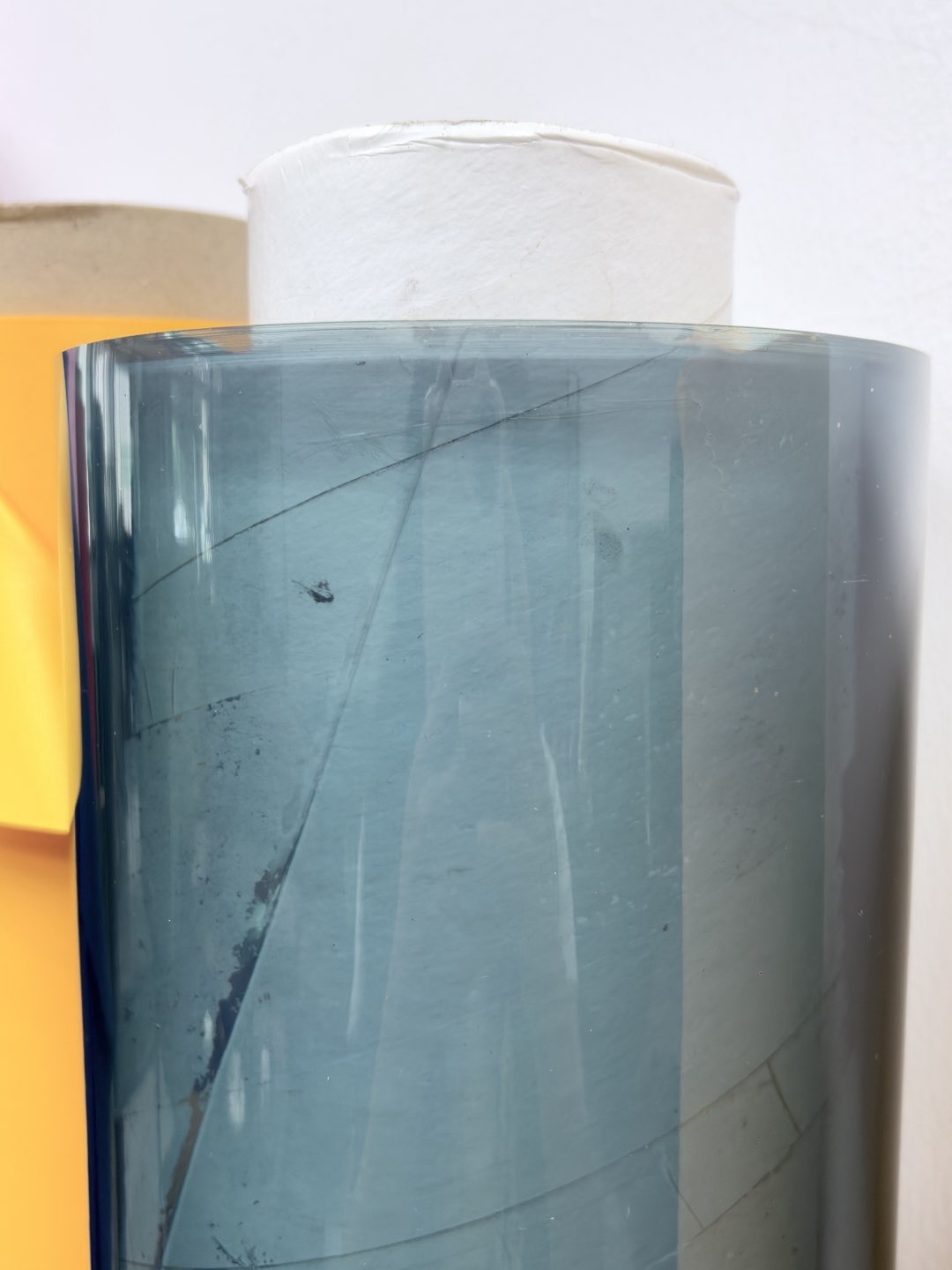
Super clear PVC film is produced with pressure applied and without powder. For semi-rigid grades below 48 PHR, heating is required during processing. Generally, the lower the plasticizer content and PHR, the higher the processing temperature required. Our minimum achievable softness level is approximately 26 PHR. Since no powder is applied to the surface, super clear PVC film offers excellent transparency but is also highly tacky.
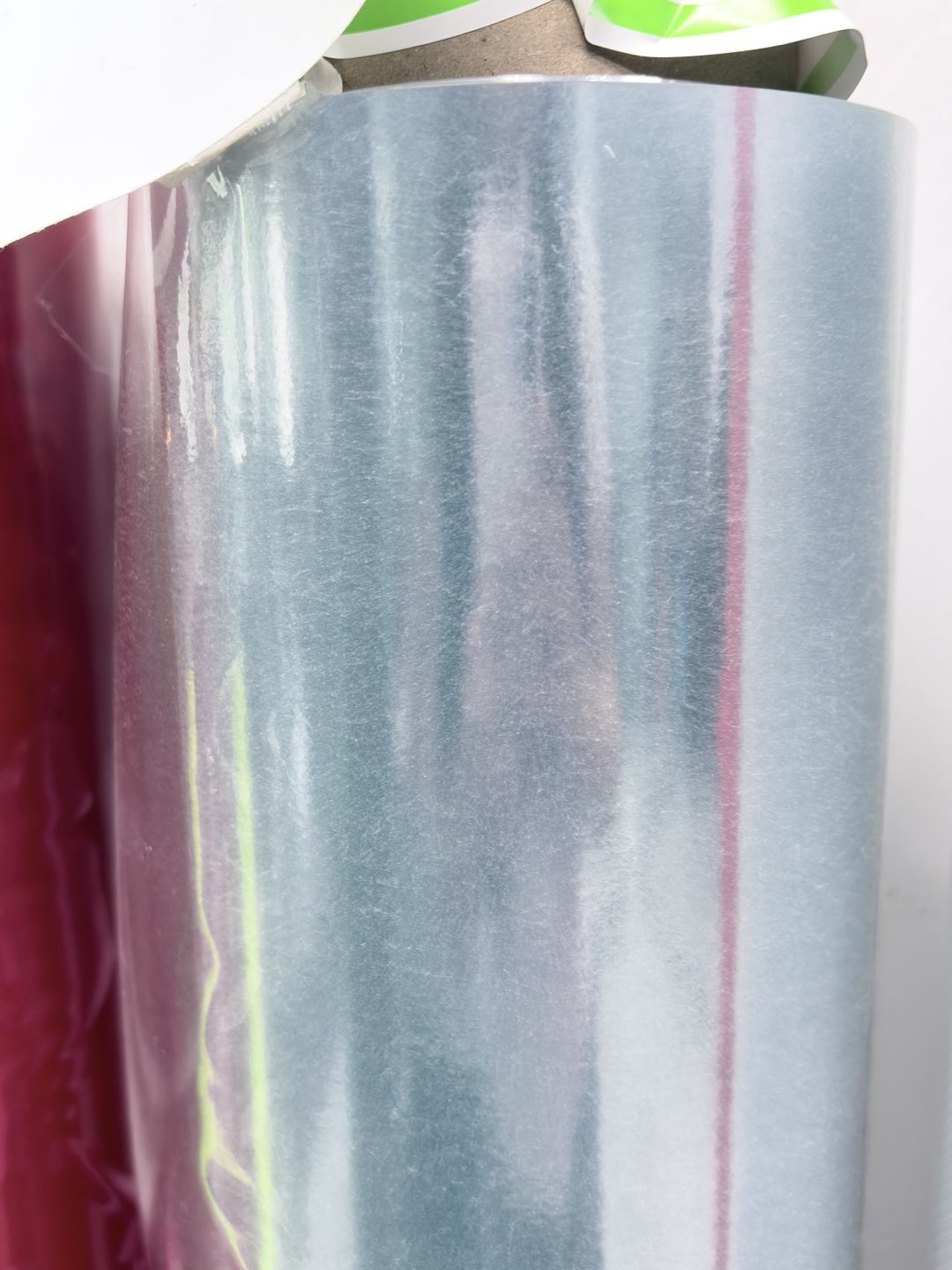
Normal clear PVC film, on the other hand, is produced without pressure, and powder is applied to the surface as an anti-blocking treatment. The amount of powder can be adjusted according to the required level of tackiness, such as light, medium, or heavy powder. Generally, more powder provides a stronger anti-blocking effect and makes the film layers easier to separate.
Temperature, Pressure, and Storage Conditions
Environmental and storage conditions can also affect how sticky PVC film feels. Higher temperatures may increase surface tackiness, while prolonged pressure during storage can cause adjacent layers to adhere more closely. Proper storage conditions are therefore important for maintaining stable handling performance.
In summary, the tackiness of clear PVC film is not determined by a single factor. It results from the combination of formulation, softness, production process, surface treatment, and storage conditions.
Different Powder Levels: Light, Medium, and Heavy Powder
For normal clear PVC film, powder is applied to the surface as an anti-blocking treatment. The powder helps reduce direct contact and adhesion between adjacent layers, making the film easier to separate, unwind, and handle during downstream processing.
Depending on the customer’s requirements and final application, different amounts of powder can be applied. Generally, normal clear PVC film can be divided into three powder levels: light, medium, and heavy powder.
Light Powder
Only a small amount of powder is applied to the surface of the PVC film. This option provides a balance between transparency and anti-blocking performance. The film maintains relatively good visual clarity while being easier to separate than non-powdered film. Light powder is suitable for applications where both appearance and handling performance are important.
Medium Powder
A moderate amount of powder is applied to provide a more noticeable anti-blocking effect. Compared with light powder, the film layers are easier to separate and unwind, which can improve handling efficiency during cutting, processing, and other downstream operations. Medium powder is a suitable choice for customers who require a good balance between transparency and ease of handling.
Heavy Powder
A larger amount of powder is applied to the film surface, providing a stronger anti-blocking effect. The layers are easier to separate, making heavy powder suitable for applications where low surface tackiness and easy handling are the main priorities. However, a higher powder level may have a greater influence on the film’s surface appearance and visual clarity and may also need to be considered for certain downstream processes.
Temperature, Pressure, and Storage Conditions
Environmental and storage conditions can also affect how sticky PVC film feels. Higher temperatures may increase surface tackiness, while prolonged pressure during storage can cause adjacent layers to adhere more closely. Proper storage conditions are therefore important for maintaining stable handling performance.
How Does Powder Level Affect PVC Film?
| Performance | Non-Powder | Light Powder | Medium Powder | Heavy Powder |
| Transparency |
Excellent
Maximum transparency and excellent optical clarity
|
Excellent
Maintains very good transparency with slight powder effect
|
Good
Slight reduction in clarity due to increased powder amount
|
Moderate
More powder may affect visual clarity
|
| Surface Appearance | Smooth and clean surface with excellent gloss and high transparency | Maintains a smooth surface with minimal powder traces | Slight powder feeling on the surface, but appearance remains acceptable | More noticeable powder effect on the surface |
| Anti-Blocking Performance |
Low
Film layers are more likely to stick together, especially under pressure or high temperature
|
Good
Reduces adhesion between layers while maintaining appearance
|
Better
Provides stronger separation performance during handling
|
Excellent
Maximum anti-blocking performance
|
| Surface Tackiness |
Highest tackiness
Film has strong self-adhesion between layers
|
Higher tackiness
compared with medium and heavy powder
|
Moderate tackiness
good balance between adhesion and handling
|
Lowest tackiness
easiest layer separation
|
| Unwinding Performance |
Difficult to unwind
due to strong adhesion between film layers
|
Easier to unwind
compared with non-powder film
|
Smooth unwinding and convenient for processing | Excellent unwinding performance, layers separate easily |
| Printing Performance | Excellent surface clarity, but surface adhesion may require proper handling before printing | Generally suitable for printing with good appearance | Suitable for most printing applications with good processing performance | Higher powder level may affect ink adhesion and may require additional surface treatment |
Sample Testing Before Mass Production
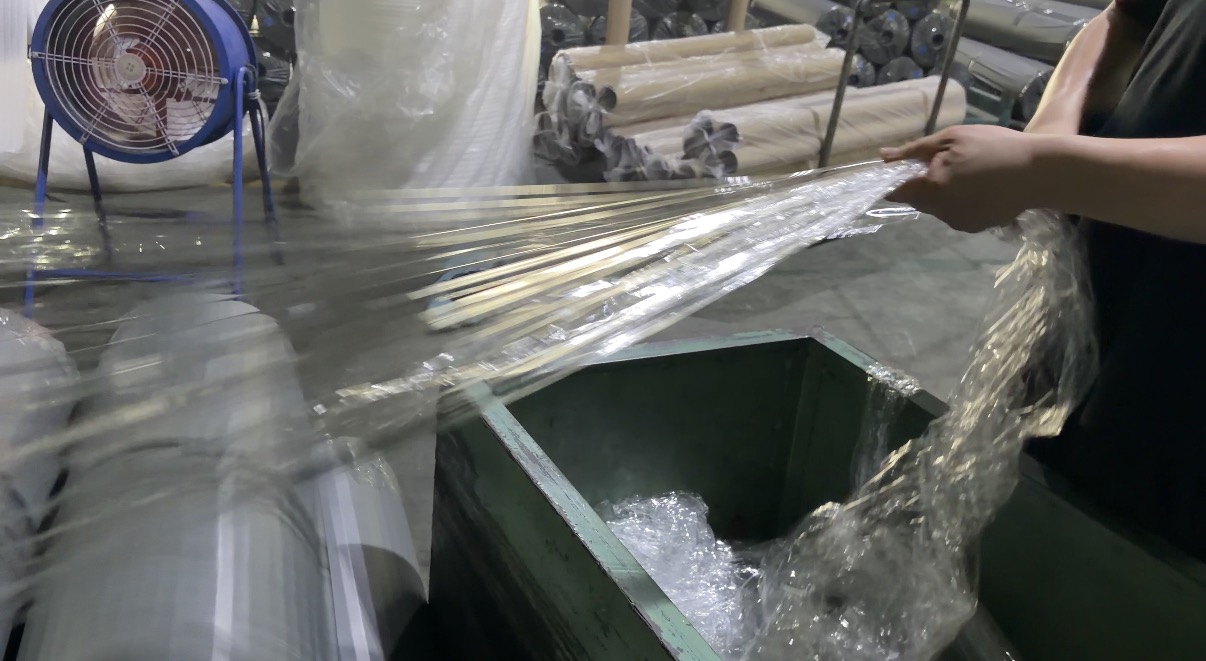
Different customers may have different expectations and acceptance levels regarding the tackiness of clear PVC film. A film that is considered too sticky for one application may be completely suitable for another. For this reason, sample testing is highly recommended before mass production.
If the customer already has a PVC film sample with the desired level of tackiness, the sample can be sent to us for evaluation. We can compare its transparency, surface tackiness, powder level, softness, and other relevant properties to determine a suitable production solution.
Alternatively, we can provide samples with different powder levels for testing. Customers can evaluate the film based on their actual production process, including unwinding, cutting, printing, welding, and other downstream operations.
Sample confirmation before mass production helps ensure that the selected PVC film meets both the customer’s processing requirements and final application needs.